
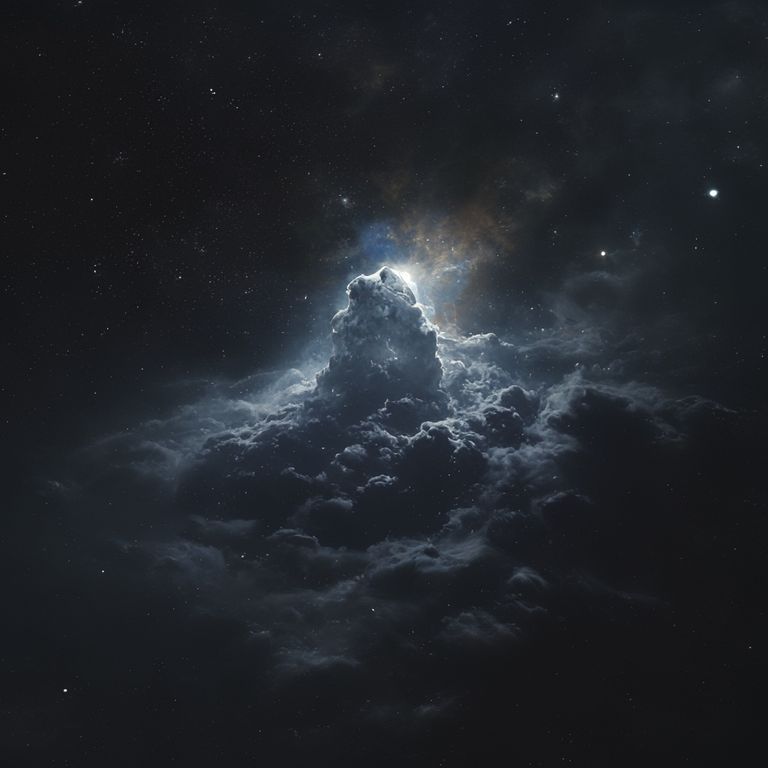
Introduction to a Galaxy Like No Other
Discover what's happening now with Galaxy Without Stars Found! Wait till you hear this - astronomers have identified a galaxy that defies all conventional understanding, a galaxy without stars. This extraordinary find has left the scientific community buzzing with questions and theories about the nature and origins of this phenomenon. Did you know that this 'galaxy that wasn't' never bore any stars, consisting of only a haze of hydrogen gas believed to be swaddled in a much more massive clump of dark matter?
The Discovery of Cloud-9
The object in question, referred to as Cloud-9, is a dark matter–dominated cloud with no stars at all. Hubble has revealed this strange cosmic object, which scientists believe is a “failed galaxy.” Here's the crazy thing - Cloud-9 is roughly 4,900 light-years wide and holds about a million Suns' worth of gas, yet it shows no signs of star formation. This is unprecedented in the study of galaxies, where stars are typically the defining feature.
Understanding the Composition of Cloud-9
The composition of Cloud-9 is perhaps its most intriguing aspect. It's essentially a vast cloud of hydrogen gas, enveloped by a significant amount of dark matter. Dark matter, a type of matter that does not emit, absorb, or reflect light, is known to make up about 85% of the universe's total matter. However, observing it directly is nearly impossible, making Cloud-9 a unique opportunity for scientists to study dark matter in a relatively isolated environment.
The Significance of a Starless Galaxy
A galaxy without stars challenges our current understanding of galaxy formation and evolution. Typically, galaxies are thought to form from gravitational instabilities within gas clouds, leading to the collapse of gas and the formation of stars. The absence of stars in Cloud-9 suggests that something interrupted or prevented this process, possibly due to the overwhelming presence of dark matter or other unforeseen factors.
Implications for Our Understanding of the Universe
The discovery of Cloud-9 has profound implications for our understanding of the universe. It opens up new avenues for research into dark matter, galaxy evolution, and the conditions necessary for star formation. Plus, it poses fundamental questions about the diversity of galaxies and the processes that lead to their formation. Also, it underscores how much remains to be discovered and understood about the cosmos.
Future Research Directions
Future studies on Cloud-9 will undoubtedly focus on unraveling the mysteries of its formation and the reasons behind its starless state. Scientists will look into the distribution of dark matter within the cloud, the dynamics of the hydrogen gas, and any potential signs of past or future star formation activity. The Hubble telescope and other advanced observational tools will play a crucial role in these investigations.
Conclusion: The Enigma of Cloud-9
In conclusion, the galaxy without stars, Cloud-9, presents an enigma that promises to reveal new insights into the workings of the universe. As scientists continue to study this phenomenon, we may uncover not only the secrets of Cloud-9 but also gain a deeper understanding of galaxy formation, dark matter, and the cosmos as a whole. What's your take on this extraordinary discovery? Share your thoughts on the implications of a starless galaxy and what you hope future research will uncover.


0 Comments