
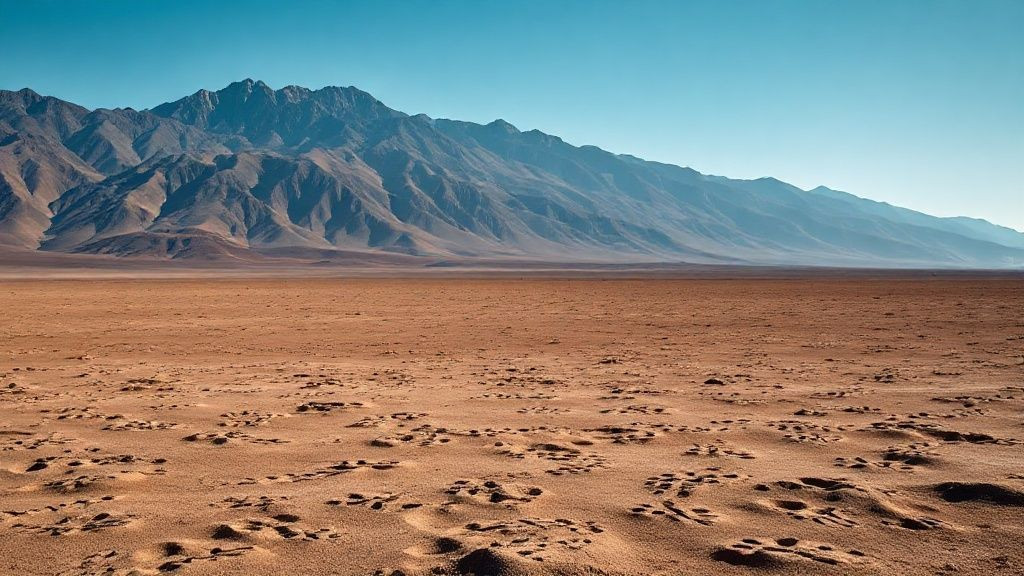
Discover what's happening now with 16,000 Dinosaur Footprints Found in One Place!
Wait till you hear this! Imagine walking through a vast, open area and stumbling upon thousands and thousands of dinosaur footprints. It sounds like something out of a movie, but it's real. Recently, researchers made an incredible discovery in Bolivia - over 16,000 dinosaur footprints in one place. Let's dive into this mind-blowing find and explore what it means for our understanding of these prehistoric creatures.
The Discovery
Did you know that the Carreras Pampa site inside Torotoro National Park in central Bolivia has revealed more than 16,000 footprints by carnivorous dinosaurs? This is not just any ordinary discovery; it's the largest dinosaur footprint site in the world. The footprints were identified along a Bolivian shoreline, and what's even more fascinating is that they reveal the first evidence of mixed-species herding behavior.
What Do the Footprints Tell Us?
Here's the crazy thing: these footprints aren't just random markings on the ground. They contain valuable information about the dinosaurs that made them. For example, the orientation of the tracks suggests that these dinosaurs were moving in a specific direction, possibly following a food source or migrating to a different area. The evidence of ripple marks also indicates that the area was once a coastal region, which provides insights into the geological history of the site.
The Significance of the Find
The discovery of 16,000 dinosaur footprints in one place is a game-changer for paleontologists. It provides a unique opportunity to study the behavior, habitat, and evolution of these fascinating creatures. By analyzing the footprints, scientists can gain a better understanding of how dinosaurs interacted with their environment and each other. This knowledge can also shed light on the reasons behind the dinosaurs' extinction.
A Closer Look at the Footprints
Let's take a closer look at the footprints themselves. The fact that there are over 16,000 of them in one place suggests that this area was a hub of dinosaur activity. The footprints are also remarkably well-preserved, which is a testament to the excellent conditions of the site. By studying the size, shape, and pattern of the footprints, researchers can infer the type of dinosaurs that made them and even estimate their speed and weight.
Comparison to Other Finds
While the discovery of 16,000 dinosaur footprints in Bolivia is unprecedented, it's not the only notable find in the field of paleontology. For example, in the Jura Mountains, outside the French village of Plagne, there's a 150m long stretch of dinosaur footprints dating back 150 million years. However, the sheer number of footprints in Bolivia makes it a standout discovery.
Future Research Directions
So, what's next for researchers studying the 16,000 dinosaur footprints in Bolivia? One area of focus will be to continue analyzing the footprints and the site itself to gain a deeper understanding of the dinosaurs that lived there. This may involve using advanced technologies such as 3D scanning and modeling to recreate the footprints and the surrounding environment. Additionally, scientists may explore the possibility of finding other fossil remains, such as bones or eggs, to further enrich our knowledge of these prehistoric creatures.
Conclusion
In conclusion, the discovery of 16,000 dinosaur footprints in one place is a remarkable find that has the potential to revolutionize our understanding of these fascinating creatures. By studying the footprints and the site, researchers can gain valuable insights into the behavior, habitat, and evolution of dinosaurs. As we continue to learn more about this incredible discovery, we're reminded of the importance of preserving our natural heritage and the wonders that it holds. What's your take on this amazing find? Share your thoughts and questions in the comments below!


0 Comments